
RecoLab.
Injury Recovery App
THE CASE AT A GLANCE
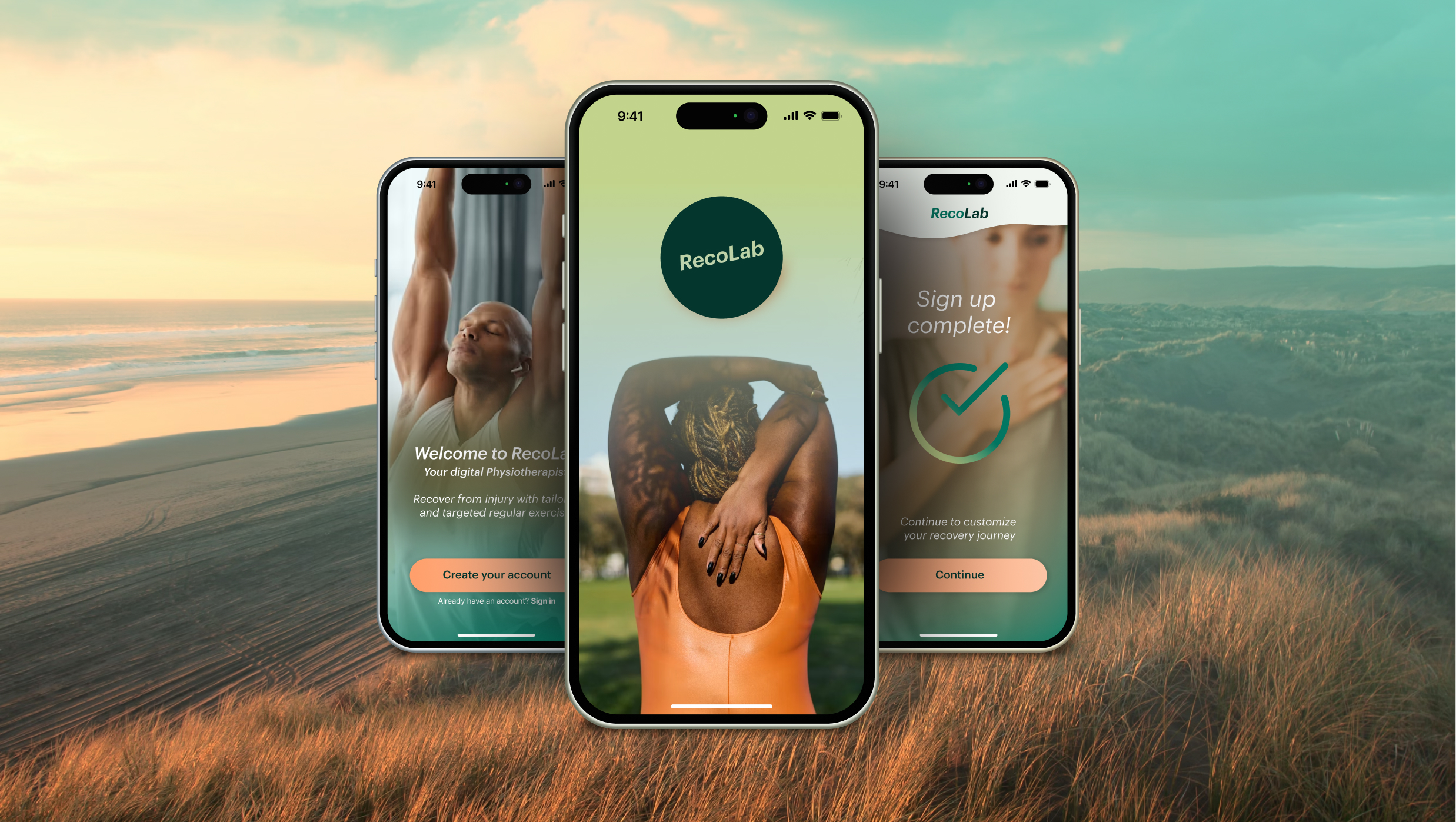
RecoLab is a mobile concept supporting people recovering from shoulder injuries. The app helps patients follow physiotherapy routines, track progress, and stay motivated during rehabilitation.
Patients join through their physiotherapist and begin a guided recovery journey. Each day they log pain levels, complete exercises, and record lifestyle factors such as sleep and activity.
The goal is to make rehabilitation easier to follow while giving patients a clearer sense of progress.
This concept was developed during a three-week UX program project exploring accessibility and how digital tools can support rehabilitation routines and long-term patient motivation.
UX/UI Design · Accessibility-focused UX Research
PROJECT
RecoLab – Injury Recovery App
CONTEXT
UX Program Sprint Project
SECTOR
Health Tech / Rehabilitation
CHALLENGE
Physiotherapy recovery often relies on patients completing exercises outside the clinic. Many struggle to maintain routines or understand whether their recovery is progressing.
MY ROLE
UX/UI design · UX research · Prototyping
FOCUS
Recovery tracking · Behaviour support · Interaction design
TIMELINE
3 weeks
TOOLS
Figma · Figjam · Miro · Adobe Creative Suite
MY ROLE
UX Designer
- Led research synthesis and defined the core problem
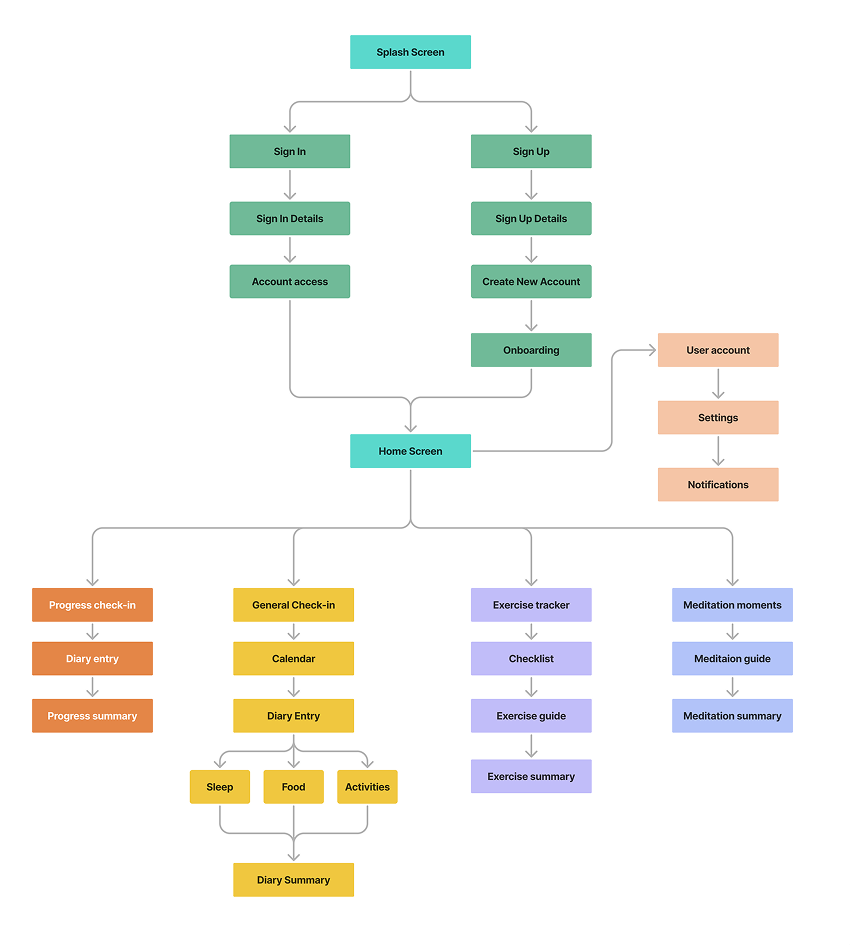
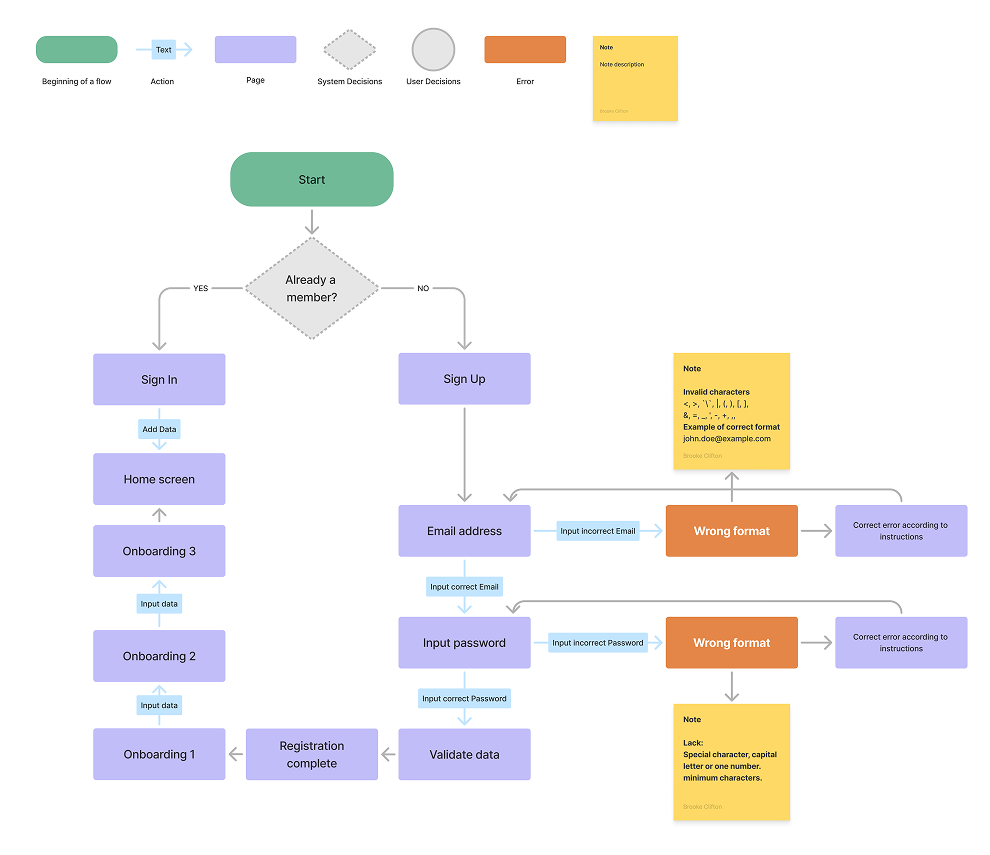
- Designed the end-to-end user flow for onboarding and recovery tracking
- Created wireframes and interactive prototypes
- Translated usability insights into iterative design improvements
UI/Visual Designer
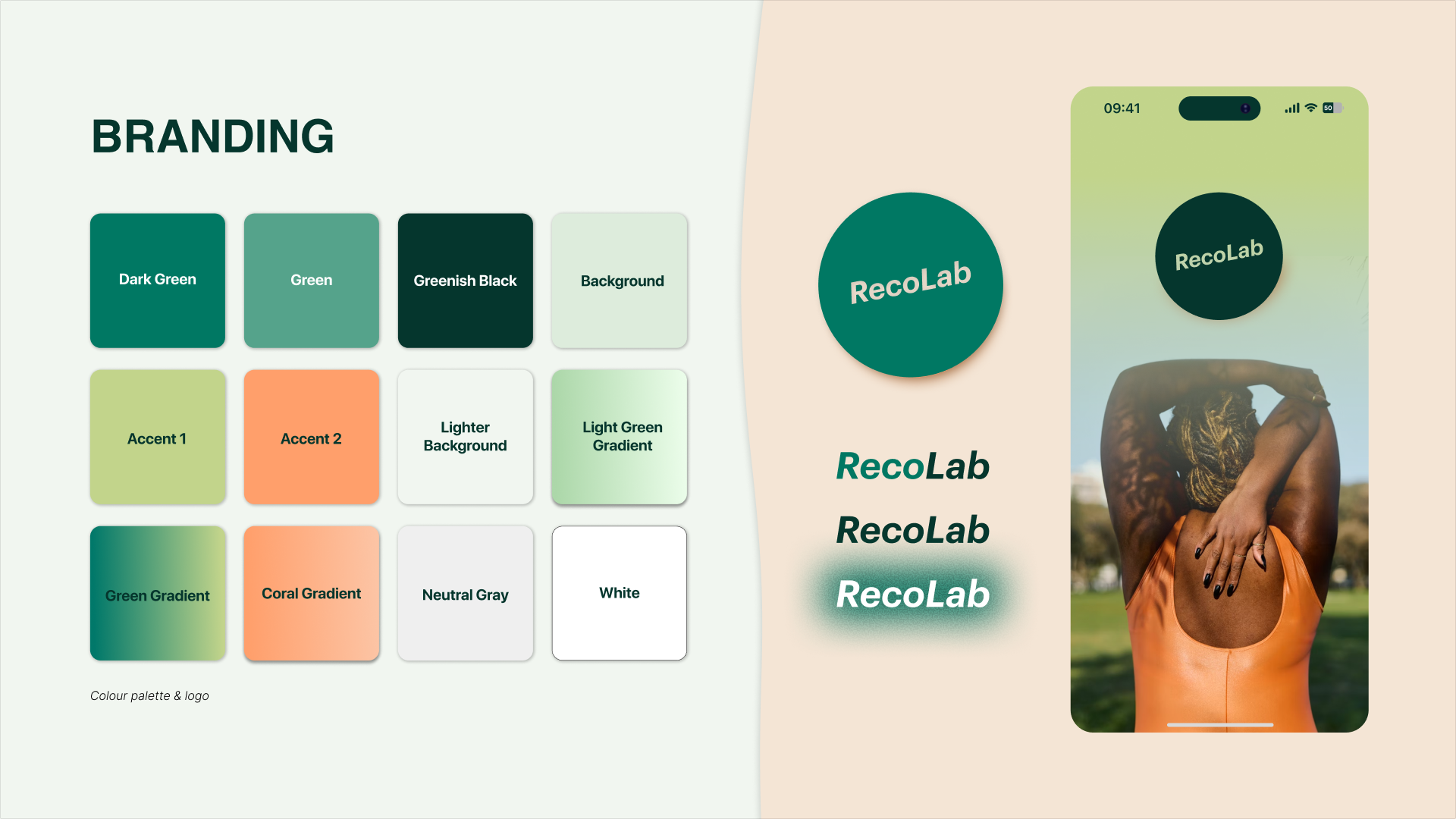
- Branding & logotype design
- Defined visual hierarchy and accessibility principles
- Designed clear, readable interface grids & layouts
- Refined interaction feedback and microcopy
- Ensured visual elements supported usability and accessibility
Challenge
Physiotherapy recovery often lasts several months and relies on patients completing exercises outside the clinic. Many struggle to maintain routines or understand whether recovery is progressing.
Existing rehabilitation apps tend to focus on exercise instructions but offer limited support for tracking progress or maintaining motivation.
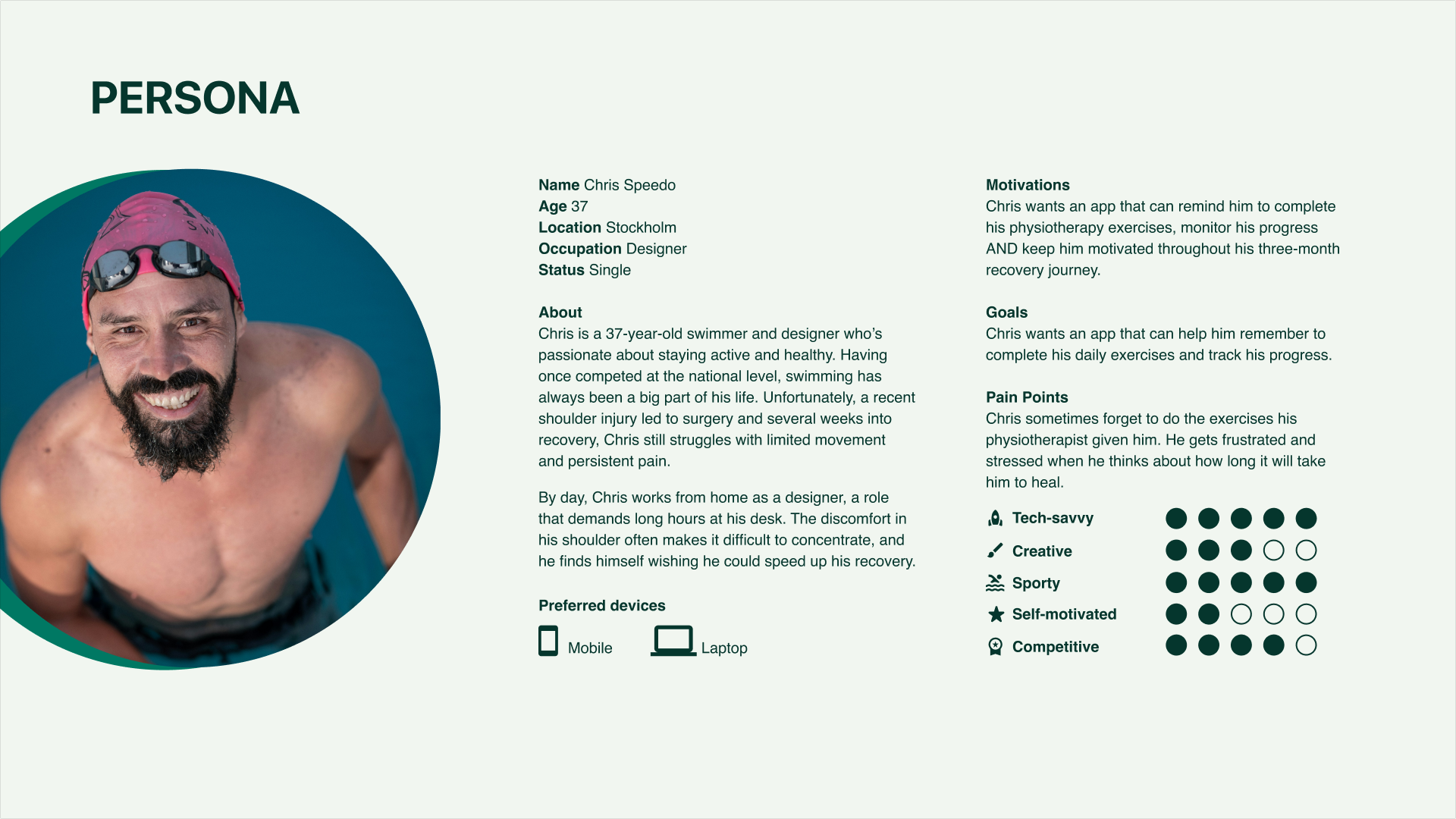
To better understand the user context, we defined a representative persona:
Chris, a 37-year-old designer recovering from shoulder surgery, wants to return to training but often forgets his exercises and finds it difficult to stay motivated during the recovery process.
Key insights
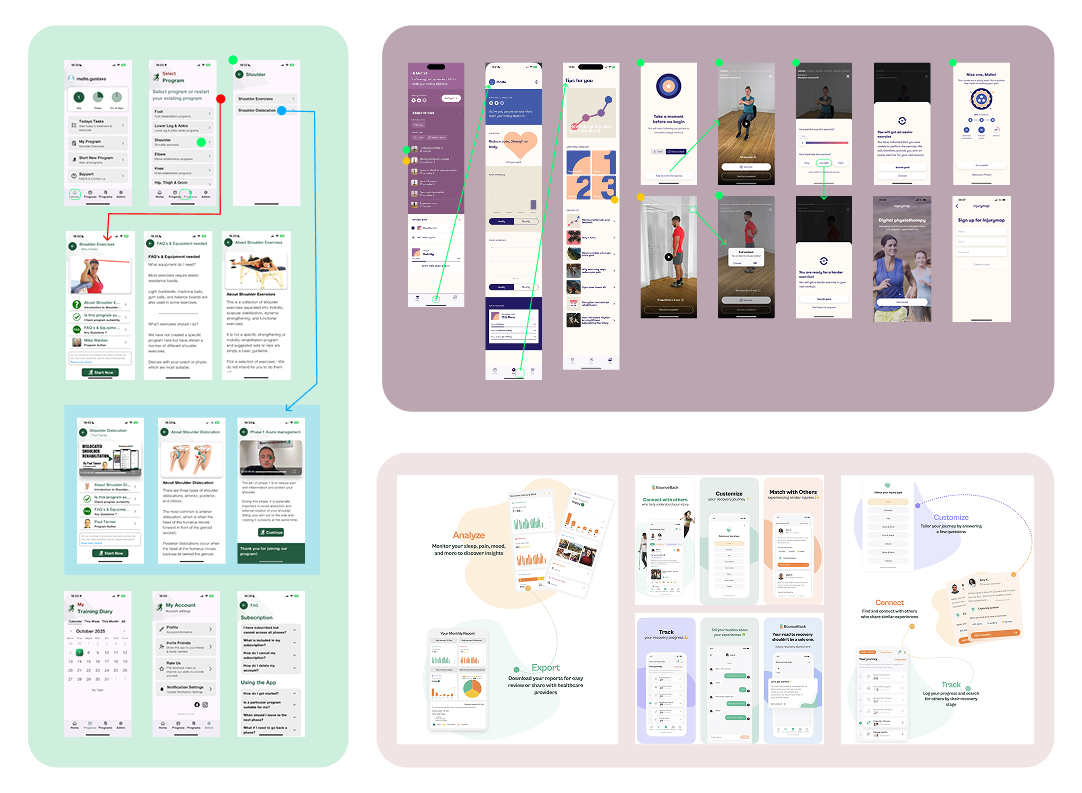
Research highlighted recurring challenges and suggested recovery tools should support daily routines and visible progress, not just exercise instructions:
- Physiotherapy exercises are easy to forget
- Recovery progress is difficult to see day-to-day
- Motivation drops when improvement feels slow
- Lifestyle factors such as sleep and stress influence healing
Core insight
“When recovery progress and daily routines are visible in one place, patients are more likely to stay consistent with rehabilitation.”
Ideation
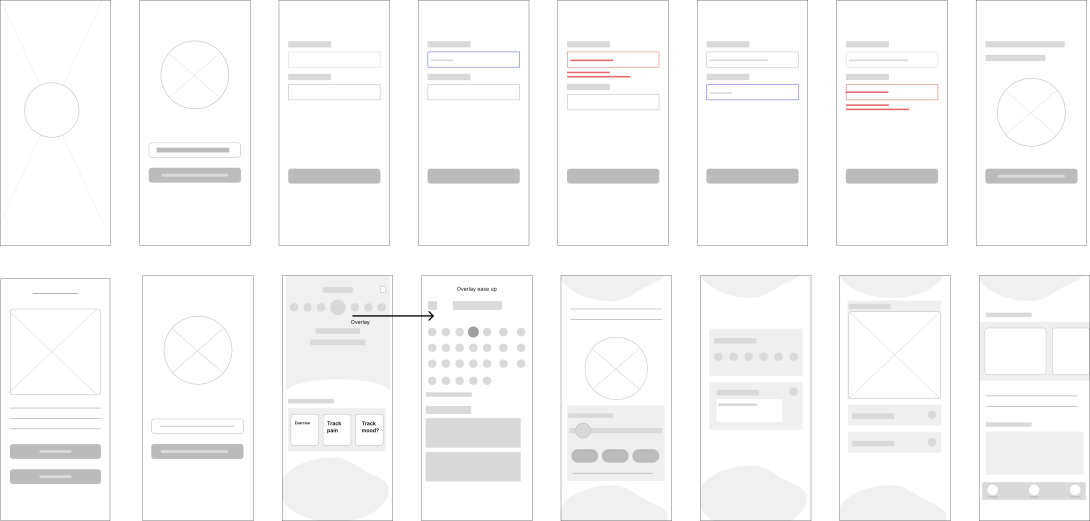
Based on the insights, I explored ways to make rehabilitation easier to maintain in daily life.
Early sketches focused on how recovery tracking, physiotherapy exercises, and lifestyle check-ins could fit into one simple routine. The goal was to reduce friction in daily recovery tasks and create a structure that encourages consistent habits over time.
Concept
RecoLab frames rehabilitation as a daily routine rather than isolated exercises.
The app combines:
- daily pain tracking
- physiotherapy exercise reminders
- lifestyle journaling for sleep and activity
- short guided meditation sessions
This structure encourages small daily actions that support long-term recovery.
Branding
The visual identity focuses on creating a calm and reassuring experience.
Soft green tones reflect health and recovery, while warm accent colours add clarity and focus. A minimal interface keeps attention on progress rather than interface complexity.
Visual keywords guiding the design included:
fresh • calm • healing • healthy
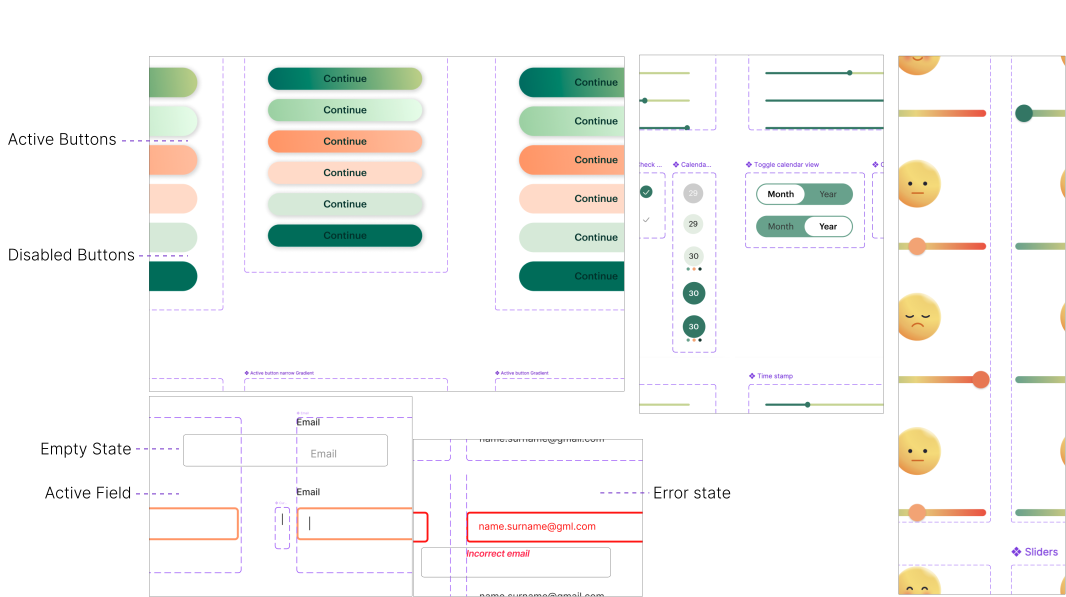
Consistency & accessibility
Consistency and accessibility were key considerations in the interface design. Interaction patterns and visual structure were kept consistent across screens so navigation feels predictable and easy to learn.
The layout prioritises clarity and visual hierarchy, helping users quickly identify the most important actions during their recovery routine.
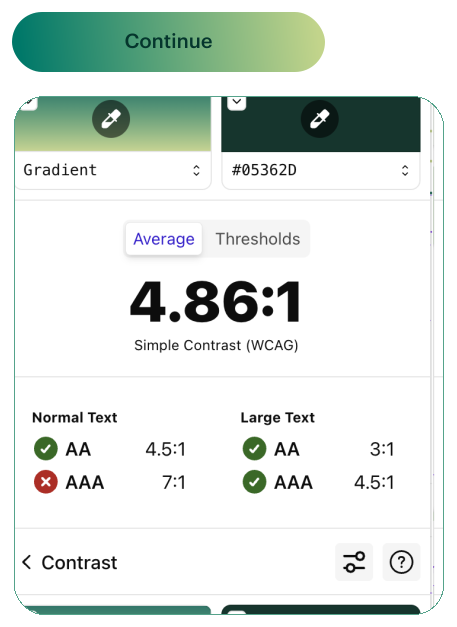
Accessibility was addressed through contrast checks and careful selection of typography and interface elements. The colour palette was tested against WCAG guidelines using contrast checking tools to ensure text and interactive components remain readable for users with different visual abilities.
Prototype & Usability Testing
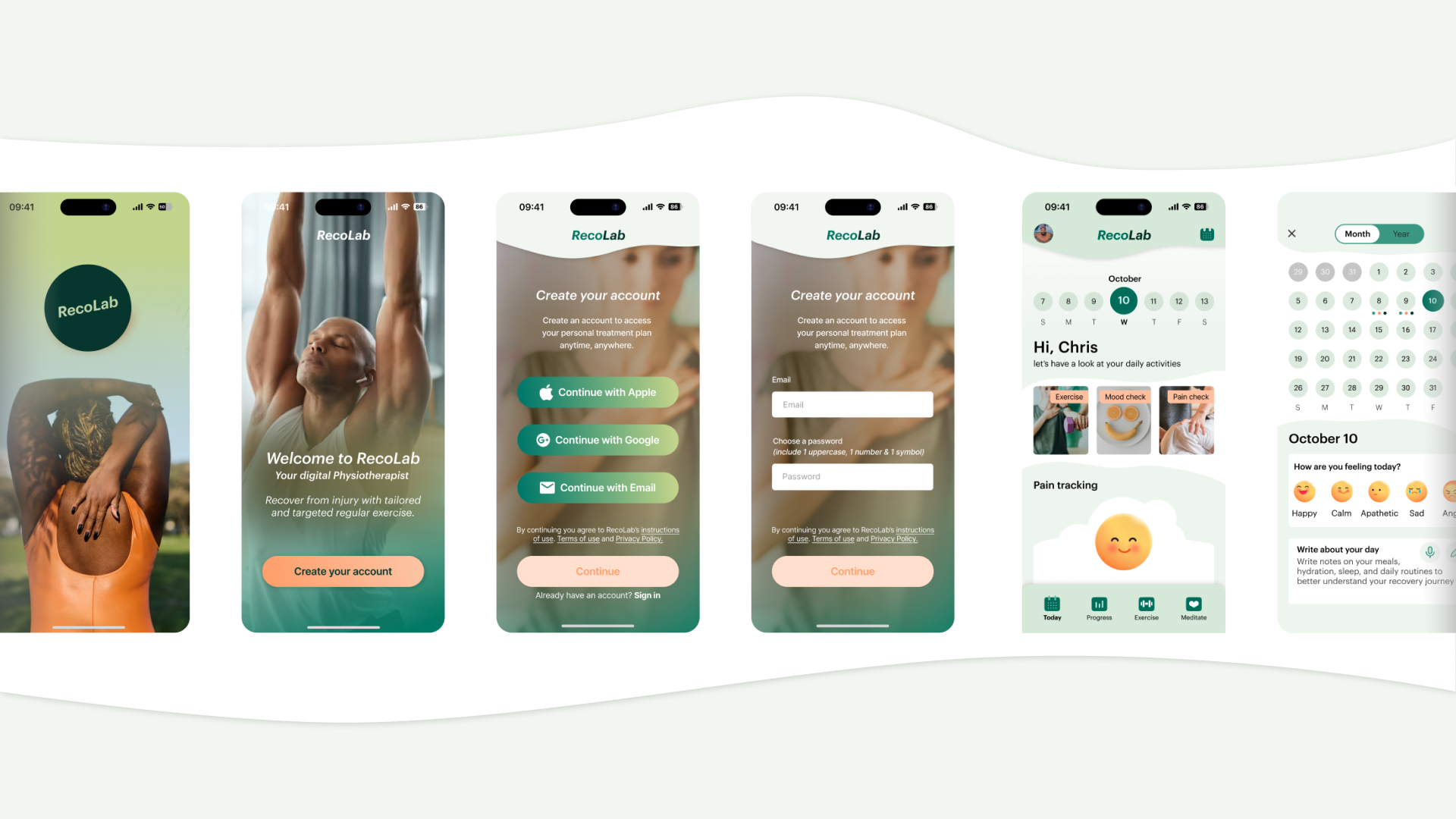
Early sketches were used to explore layout and navigation. These ideas were developed into a high-fidelity prototype showing the complete recovery flow.
Core interactions included:
- sign-up and onboarding
- daily recovery check-ins
- exercise tracking
- lifestyle journaling
Outcome & Impact
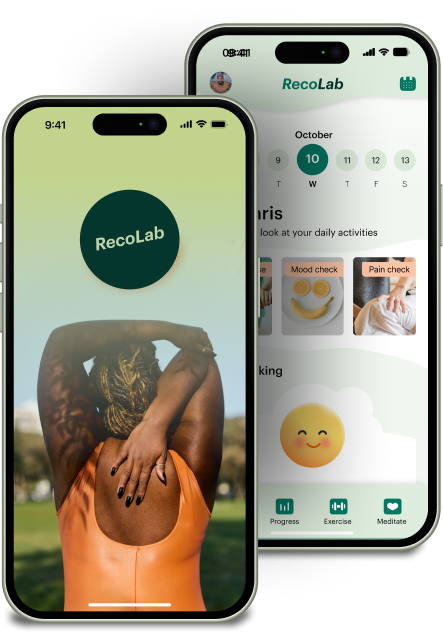
The final concept provides a clear structure for rehabilitation. Patients can track pain levels, complete exercises, and record lifestyle factors influencing recovery.. By focusing on simple daily actions, the interface supports consistent rehabilitation between physiotherapy visits.
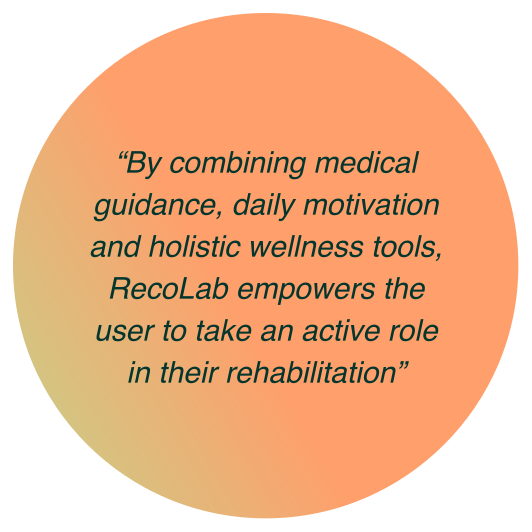
RecoLab shows how digital tools can support rehabilitation outside clinical settings.
By making progress visible and encouraging small daily actions, the concept helps patients stay engaged with recovery routines.
The structured data collected through the app could also support physiotherapy research and treatment insights.
The Takeaway
Recovery tools need to support behaviour as much as treatment. Designing for rehabilitation means making progress visible, reducing friction in daily routines, and creating an experience that patients can realistically maintain over time.
Future work could include usability testing with patients and physiotherapists, deeper recovery analytics, and integration with clinical rehabilitation platforms.